How it fits together
Internal vs client-visible
One switch decides whether a client can see something. It is a safety setting rather than a preference, and it is worth understanding before you need it.
The short version. Anything marked internal is hidden from people with the client role. Everything else on a project a client has been given is visible to them. If you are unsure whether something is marked, assume it is not.
Who this affects
Only the client role. Owners, admins and members see everything on their projects, and so does an outside collaborator — a freelancer is bounded by which projects they were given, not by the content inside them.
That is the trap worth naming: if you add a customer as a collaborator because it seemed close enough, they can read your internal notes.
What can be marked internal
- Tasks — an individual task disappears for clients.
- Lists — a whole list, and everything in it. The fastest way to keep a working area private.
- Documents — drafts, internal notes, anything not meant for the other side.
- Comments and bug notes — so a thread can hold both the client conversation and your own.
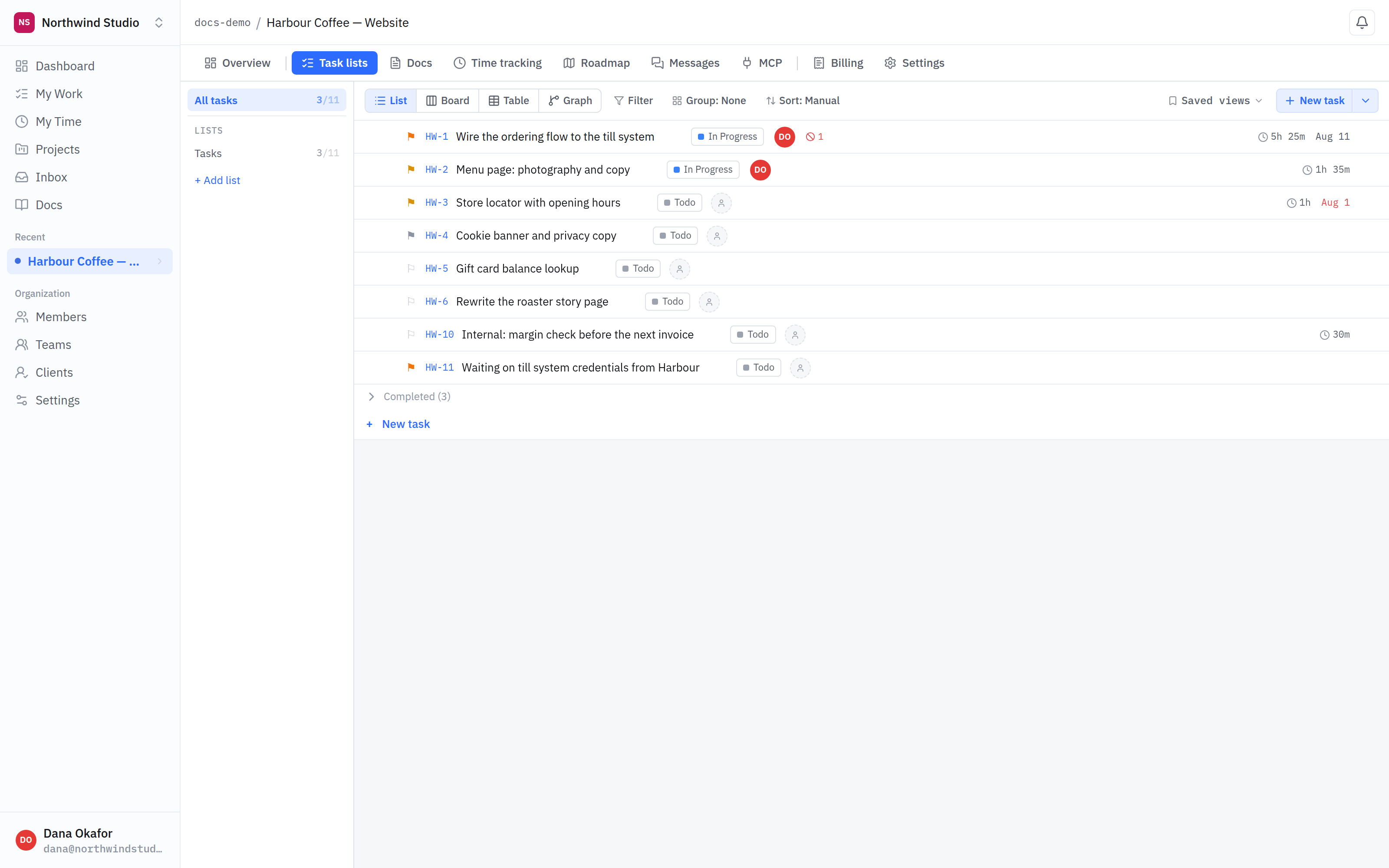
- An internal task. It sits in your list like anything else, and does not exist as far as a client is concerned.
Checking before you post
Two questions, in this order:
- Is a client on this project at all? If nobody outside your company has been granted it, nothing here is going anywhere.
- Is this item — or the list it sits in — marked internal? If neither is, treat it as something the client will read.
What clients see elsewhere
The client-facing surfaces are deliberate ones: the roadmap you share, message threads you have with them, and invoices you issue. Those exist to be seen. The rest of a project is yours unless you leave it visible.
When in doubt, mark it internal. Making something visible later costs a click. The other direction costs a conversation you did not want to have.
What is next
This is the end of How it fits together. The module pages cover each surface in turn, including which parts of them a client sees.