The modules
Bugtracker
Optional, per project. Defects kept apart from planned work, because they behave differently.
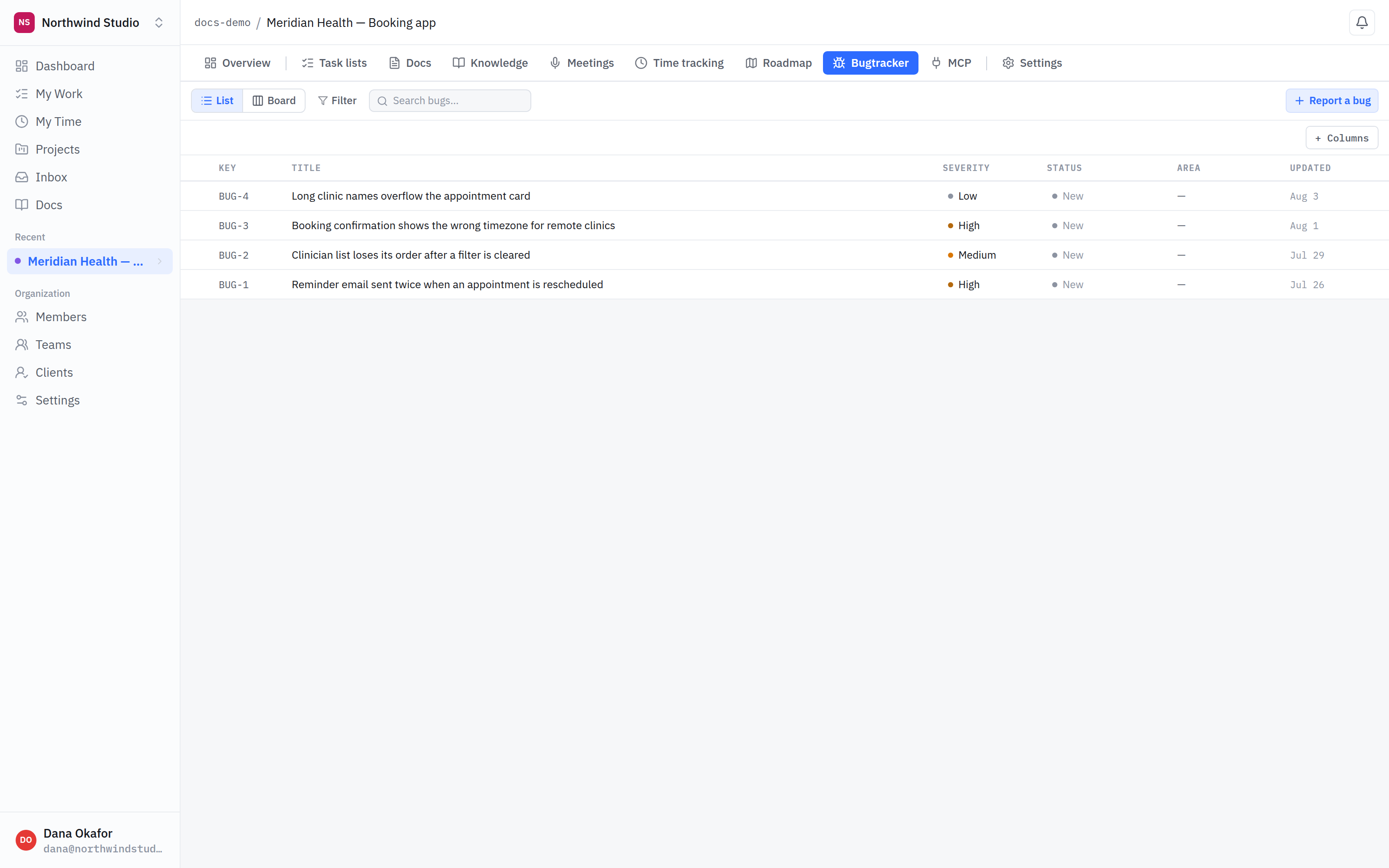
- Their own keys. Bugs are numbered BUG-1 upwards, separately from task keys, so a reference is never ambiguous.
- Severity. How bad the effect is — a property of the bug rather than a decision about when you will deal with it.
- Status. Bugs run their own workflow, apart from your task stages. Everything here is still at New.
Why not just tasks
A bug arrives rather than being planned, needs a severity as well as a priority, and is often reported by someone who should not see your backlog. Keeping them apart means neither list has to pretend to be the other.
Severity and priority
- Severity — how bad the effect is. A property of the bug.
- Priority — how soon you will deal with it. A decision you make.
They come apart regularly: a critical bug affecting one customer on an old browser may still not be the next thing you do.
Clients and bugs
A bug can be marked client-visible, so the person who reported it can follow it without being given the whole tracker. Everything else stays internal by default.
Turning it off keeps the bugs. Disabling the module hides the tab; the reports are still there when you turn it back on.